
Archive Boxes Supply
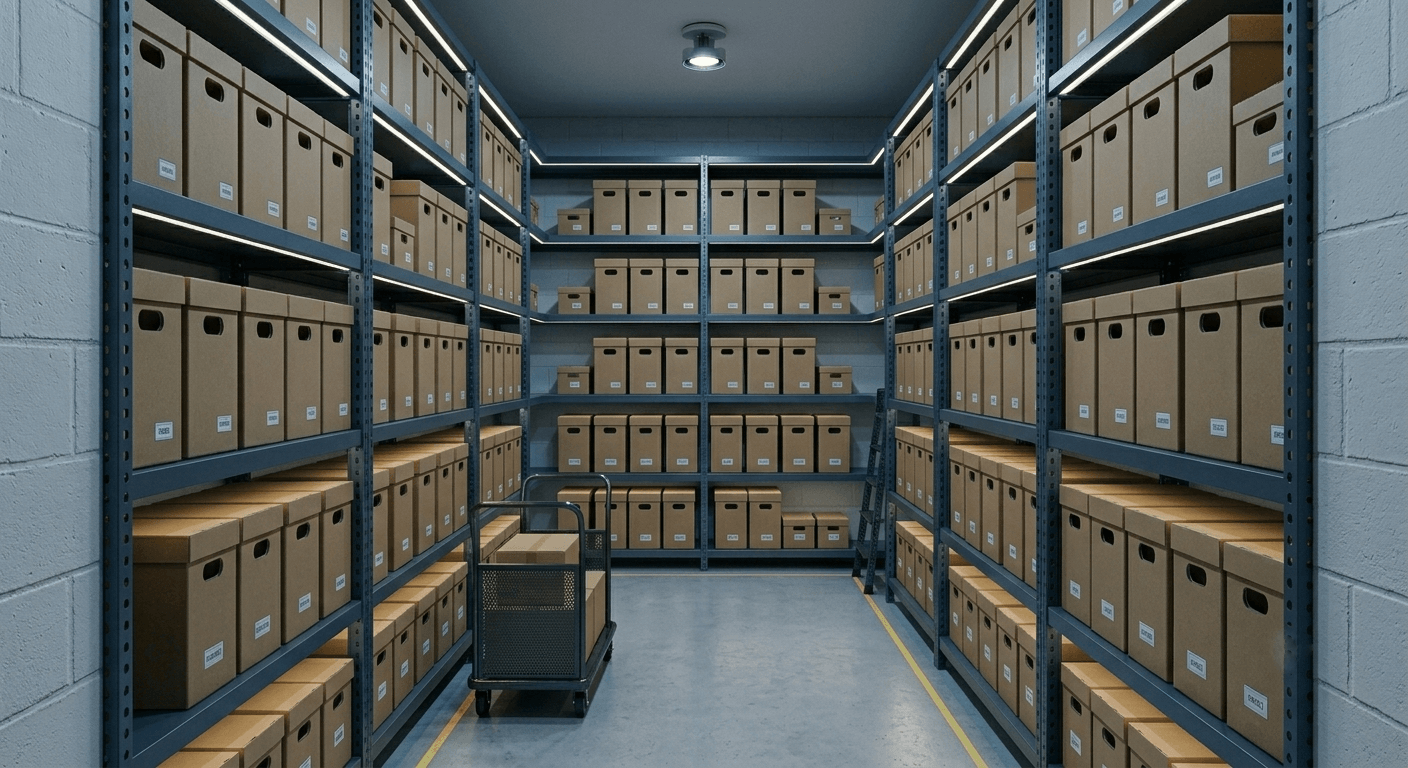
Proper storage begins with the right container. Archive boxes are the foundation of any physical records management strategy, and choosing the right quality and specification makes a significant difference in document preservation. SwiftFiles Solution supplies a comprehensive range of archive-grade boxes designed to meet professional records management standards. Whether you are digitizing a legacy archive, storing active files off-site, or preparing for regulatory compliance audits, the boxes you choose directly impact the longevity, accessibility, and security of your records. This guide explores every aspect of archive box selection, from material chemistry to procurement strategy, so you can make informed decisions that protect your organisation's information assets for decades to come.
The quality of an archive box is not merely a matter of durability — it is a chemical and structural decision that determines whether your documents survive years or decades of storage. Poor-quality boxes, particularly those made from recycled papers with high lignin content, can actively accelerate document degradation. Lignin, a natural polymer found in wood pulp, becomes acidic as it breaks down over time. When a low-grade box contains lignin, it gradually releases acids that migrate into the documents stored inside, causing paper to yellow, become brittle, and eventually disintegrate. This process, known as acid migration, is irreversible and can destroy an entire archive long before its intended retention period expires.
Physical collapse is another critical risk. Standard storage boxes are often designed for short-term transport or light retail use, not for the sustained vertical loads of stacked archival storage. A box that fails under weight can cause not only the loss of its own contents but also damage to boxes and documents stacked below. In high-density shelving systems, a single collapsed box can trigger a domino effect, leading to widespread destruction and costly recovery efforts. Professional archive boxes are engineered with reinforced corners, thicker sidewalls, and compression-rated board materials that maintain structural integrity even under significant load over many years.
Pest infiltration is a third major concern. Insects and rodents are attracted to paper-based environments, and boxes with poor seals, thin walls, or gaps at the corners provide easy entry points. Once pests enter a box, they can cause irreparable damage through feeding, nesting, and burrowing. High-quality archive boxes feature tight-fitting lids, seamless corner construction, and dense board materials that resist pest penetration. Many also incorporate pest-deterrent treatments or coatings that add an extra layer of protection without introducing harmful chemicals into the storage environment.
Established archival standards govern the manufacture of preservation-grade boxes. The key specifications include acid-free construction (pH 7.0 or higher), lignin-free paperboard, and the use of buffering agents such as calcium carbonate to neutralise any acids that may form over time. Buffered boxes are recommended for most paper documents, while unbuffered boxes are preferred for photographic materials, silk, wool, and other items sensitive to alkaline environments. Understanding these distinctions is essential because using the wrong box type can be almost as damaging as using a non-archival box. SwiftFiles Solution advises every client on the appropriate box chemistry for their specific document types and storage conditions.
Beyond chemistry, the long-term preservation properties of a box are determined by its resistance to environmental fluctuations. Archives stored in warehouses, basements, or tropical climates face challenges from humidity, temperature swings, and airborne pollutants. Quality archive boxes act as a microclimate buffer, slowing the rate at which external conditions reach the documents within. This passive protection is a critical component of any preservation strategy and one that is easily overlooked when cost is the primary driver of box selection. Investing in proper archival-grade boxes from the outset is far more economical than attempting to remediate damaged records later.
Archive boxes are not a one-size-fits-all product. Different document types, storage environments, and retrieval frequencies demand different box configurations. The most common category is the standard record storage box, typically sized to hold letter or A4-size documents in hanging or stacked files. These boxes are designed for general-purpose archival use, with dimensions that maximise space efficiency on standard shelving units while remaining light enough to handle when full. Most standard record boxes have a capacity of approximately one cubic foot and are available in both regular and deep configurations for varying file quantities.
Banker's boxes are a familiar variant, widely used for short-term storage and document transport. While convenient and low-cost, traditional banker's boxes are often constructed from single-wall corrugated board that provides limited protection for long-term preservation. SwiftFiles Solution offers enhanced banker's boxes built from archival-grade materials, combining the familiar form factor with the preservation properties required for extended storage periods. These are ideal for organisations that need the convenience of the banker's box format without compromising on quality or longevity.
Hanging file boxes accommodate Pendaflex-style hanging file frames and are a preferred solution for active records that require frequent retrieval. Unlike standard record boxes, hanging file boxes allow files to be accessed individually without removing the entire contents, saving significant time in high-turnover environments. They are commonly used in finance, legal, and human resources departments where ongoing access to active records is essential. Hanging file boxes from SwiftFiles Solution feature reinforced rails and rigid sidewalls that prevent sagging and ensure smooth file movement even after years of use.
Flat storage boxes are purpose-built for oversized documents such as architectural drawings, engineering blueprints, maps, posters, and large-format artwork. These documents cannot be folded or rolled without damage, so flat boxes provide wide, shallow compartments that allow items to lie completely flat. Typical flat archive boxes are constructed with a drop-front or lift-off lid for easy access and are often fitted with metal-edge reinforcements to maintain shape under stacking pressure. SwiftFiles Solution supplies flat storage boxes in multiple depths and custom lengths to accommodate the full range of oversize media found in technical and creative archives.
Specialty archive boxes address the unique needs of specific media types. Photograph boxes are made from unbuffered or photo-safe materials to prevent alkaline damage to photographic emulsions. Microfilm boxes incorporate rigid internal spindles and moisture-barrier layers to protect film reels from humidity and handling damage. Map chests and plan cabinets offer large, shallow drawers for organised storage of rolled or flat maps. For organisations with highly irregular document sizes, SwiftFiles Solution offers custom box manufacturing, where every dimension—height, width, depth, board thickness, handle placement, and lid style—can be tailored to exact requirements. This service is invaluable for museums, archives, and corporate record centres that need to store non-standard items securely.
The physical board from which an archive box is made determines its strength, longevity, and protective properties. Professional archive boxes are constructed from high-density paperboard, typically measured in points or caliper thickness, with heavier boards used for larger boxes and higher stacking loads. Standard archival-grade board ranges from 24-point to 60-point thickness, with double- or triple-wall corrugated options available for heavy-duty applications. The board must be rigid enough to resist bowing under load while remaining workable for folding, scoring, and assembly. SwiftFiles Solution tests every board shipment for compression strength, tear resistance, and dimensional stability before it enters production.
pH neutrality is the single most important chemical specification for archival boxes. Paperboard with a pH below 7.0 is acidic and will gradually transfer that acidity to stored documents. True archival-grade board targets a pH between 7.5 and 9.5, achieved by selecting pulp sources that are naturally acid-free or by chemically processing the board to remove lignin and other acidic compounds. A calcium carbonate buffer is often added to the board during manufacturing to maintain pH stability over time, neutralising any acids that may form through environmental exposure or internal chemical reactions. Unbuffered board, with a pH near 7.0, is reserved for materials that react adversely to alkaline conditions.
Moisture resistance is another critical material property, especially for archives located in humid environments or where temperature control is inconsistent. Many high-quality archive boxes incorporate a moisture barrier — either through clay coating, polyethylene lamination, or the natural density of the board fibres. These barriers slow moisture ingress, reducing the risk of mould, mildew, and dimensional warping of stored documents. However, the barrier must be breathable enough to allow trapped moisture to escape, preventing condensation inside the sealed box. SwiftFiles Solution's material engineers balance these competing requirements to produce boxes that perform optimally across a range of environmental conditions.
Recycled content is increasingly requested by organisations with sustainability commitments. While early recycled boards had inconsistent quality and higher lignin content, modern processing techniques enable the production of high-quality archival board with significant post-consumer recycled fibre content. SwiftFiles Solution offers boxes manufactured with up to 70% recycled material without compromising archival specifications. Each batch is certified for pH, lignin content, and physical performance. Printability is another important consideration — archive boxes frequently need clear, durable labelling. Our boxes accept a wide range of printing methods, including inkjet, thermal transfer, and pre-printed labels, with surface coatings that prevent ink smudging and label peeling in storage conditions.
Handle and lid designs are material-intensive features that must balance ergonomics with strength. Metal-reinforced handles distribute weight across a larger area of the board, reducing the risk of tearing when boxes are carried. Plastic or metal edge guards protect corners and edges from impact damage. Lid designs include lift-off lids, attached hinged lids with Velcro or snap closures, and telescoping lids that overlap the box body for a tighter seal. Dust flaps and interlocking tabs further enhance the seal integrity. SwiftFiles Solution offers multiple handle and lid configurations, and our team can recommend the optimal design based on the weight of the expected contents, the frequency of handling, and the storage configuration.
A well-designed archive box is only as useful as the system that tracks its contents. Without robust labelling and tracking, even the most carefully stored archive becomes an expensive guessing game. Modern archive management relies on a combination of physical labelling and digital databases to maintain precise control over every box in the collection. The foundation of this system is the box label — a durable, machine-readable identifier that links the physical box to its digital record. Labels must withstand the storage environment, remaining legible and scannable for the entire life of the archive, which may span decades.
Barcode integration is the most widely adopted tracking methodology for archive boxes. Each box is assigned a unique barcode that is printed on a high-adhesion, fade-resistant label and affixed to the box exterior — typically on the front and one side for multi-directional scanning. Linear (Code 128 or Code 39) and 2D (QR or Data Matrix) barcodes are both supported, depending on the scanning hardware and software platform in use. Barcode scanners, including handheld units, mobile apps, and fixed-mount tunnel scanners, can read a box label in milliseconds, enabling rapid check-in, check-out, inventory auditing, and retrieval operations. SwiftFiles Solution supplies pre-barcoded boxes or blank boxes with compatible label placement zones for client-generated barcodes.
Radio-frequency identification (RFID) offers a higher level of automation for large-scale archives. RFID tags affixed to archive boxes can be read wirelessly from a distance, allowing an entire shelving bay to be inventoried in seconds without removing any boxes. Passive RFID tags (UHF or HF) require no battery and have a lifespan exceeding 50 years, making them ideal for permanent archives. RFID-enabled storage rooms can detect misplaced boxes, track movement patterns, and integrate with access control systems for security. While the per-tag cost is higher than barcode labels, the labour savings and accuracy improvements often justify the investment for archives exceeding 10,000 boxes. SwiftFiles Solution offers RFID-tagged boxes and can assist with tag encoding and reader system design.
Labelling best practices extend beyond the technology choice. Every label should include the box identifier, the date of creation, the retention category, the department or originating unit, and a destruction date where applicable. Text should be printed in a clear, high-contrast font that remains legible even after years of storage. Labels must be placed in a consistent position across all boxes to support efficient manual scanning and visual identification. SwiftFiles Solution provides label templates, placement guides, and printing services to ensure consistency across your entire archive. We also supply weatherproof and chemical-resistant label stocks for harsh storage environments.
Inventory management systems built around box tracking enable organisations to maintain a complete, searchable register of every box in the archive. These systems record the box identifier, contents summary, storage location (building, room, row, bay, shelf), access history, and retention schedule. Integration with document management software allows users to search for individual files and instantly identify the box containing them. Location tracking can be further enhanced with floor-plan mapping and zone-based searching. For clients managing multiple storage sites, SwiftFiles Solution supports centralised inventory systems that provide a unified view of all boxes across on-site, off-site, and third-party storage facilities, eliminating the risk of lost or forgotten boxes.
Even the highest-quality archive boxes will underperform if they are packed improperly. Correct packing practices begin with weight limits — a fully loaded archive box should not exceed 15 kilograms (approximately 33 pounds). Heavier boxes pose ergonomic risks to staff handling them, increase the likelihood of bottom failure during transport, and place excessive stress on shelving systems. SwiftFiles Solution recommends using a scale during packing to verify box weights, particularly when mixing document types with different densities. For files of exceptional weight, smaller-format boxes or reduced fill levels should be used to stay within safe handling limits.
The orientation of files within a box affects both preservation and accessibility. Documents should be stored vertically (upright) whenever possible, as this distributes weight evenly and prevents the distortion that occurs when papers are stacked flat. Folders should fit snugly without being forced — loosely packed files slump and wrinkle, while overpacked files cause bulging that strains the box structure and makes retrieval difficult. Hanging files should be oriented consistently, with folder tabs aligned in a staggered pattern for easy scanning. Maps and oversized items intended for flat storage should never be forced into a standard record box, as folding causes permanent creases and weakens the paper fibres at the fold line.
What should never be stored together is a question that arises frequently in archive management. Photographs, negatives, and magnetic media should be segregated from standard paper documents because their chemical and environmental requirements differ significantly. Papers that have visible mould, active pest infestation, or water damage must be isolated immediately to prevent contamination of neighbouring boxes. Documents containing metal fasteners — staples, paperclips, binder clips — should ideally have these fasteners removed before storage, as they rust over time and leave permanent stains. If removal is impractical, stainless-steel or plastic fasteners are preferable to standard nickel-plated steel. SwiftFiles Solution provides segregation guidelines tailored to your document mix during the box selection and packing planning phases.
Stacking guidelines are critical for both safety and preservation. Archive boxes should be stacked no more than five high under standard shelving conditions, with heavier boxes at the bottom and lighter boxes above. Every stack must be aligned vertically — offset stacks concentrate weight unevenly and can cause boxes to collapse or shelf boards to fail. Boxes should never be stacked directly on the floor, as this exposes them to water damage from spills and cleaning, pest access, and temperature extremes near ground level. Always use pallets, shelving, or racking systems that keep boxes at least 10 centimetres off the floor. SwiftFiles Solution supplies compatible shelving and racking designed to optimise box storage density while maintaining safe stacking configurations.
Environmental considerations extend beyond the individual box to the storage facility as a whole. Archives should be maintained at a stable temperature between 18 and 22 degrees Celsius with a relative humidity of 35 to 50 percent. Fluctuations in temperature and humidity cause paper fibres to expand and contract, accelerating deterioration over time. Air quality is equally important — particulate filters and pollutant removal systems protect documents from sulphur dioxide, nitrogen oxides, and ozone, which can cause chemical damage. SwiftFiles Solution recommends a scheduled rotation and review programme for all archives, where boxes are inspected annually for signs of damage, pest activity, or environmental stress. Damaged boxes should be replaced immediately and their contents transferred to new archival containers to prevent further deterioration.
Organisations managing large-scale archives require a procurement model that ensures consistent quality, reliable availability, and cost efficiency. SwiftFiles Solution's bulk supply programme addresses all of these requirements through volume-based pricing, streamlined ordering processes, and dedicated account management. Whether you need a single shipment of archive boxes for a one-time project or ongoing replenishment for a growing records centre, our bulk supply options deliver significant per-unit savings compared to retail or small-quantity purchasing. Volume discounts are structured to reward commitment, with deeper discounts available for annual contracts and multi-year agreements.
Just-in-time delivery is a key component of efficient archive box procurement. Rather than requiring clients to warehouse large quantities of empty boxes, SwiftFiles Solution synchronises deliveries with your packing schedule, reducing the need for on-site storage space and minimising working capital tied up in inventory. Our logistics team coordinates with your facilities to schedule deliveries during designated windows, ensuring that boxes arrive exactly when they are needed without disrupting daily operations. For organisations with seasonal packing cycles — such as year-end record purges or compliance-driven retention events — we can pre-schedule multiple deliveries across the year to match anticipated demand.
Warehousing and consignment stock arrangements offer additional flexibility for high-volume clients. Under a consignment model, SwiftFiles Solution maintains a dedicated inventory of boxes at your facility while retaining ownership until the boxes are used and invoiced. This arrangement eliminates stock-out risk and removes the burden of inventory management from your team. Physical counts and replenishment triggers are agreed in advance, and our account managers conduct regular reviews to adjust stock levels based on usage patterns. For organisations with multiple storage locations, we can maintain consignment stocks at each site, ensuring that boxes are always available where they are needed.
Customisation services set SwiftFiles Solution apart from commodity box suppliers. We offer full-colour printing and embossing for branding, including company logos, department colour-coding, and compliance markings. Custom box dimensions are available for non-standard document formats, and we can modify handle positions, lid styles, and material specifications to suit unique requirements. Even within a standard box size, we offer a range of interior configurations — with or without partitions, dividers, or insert trays — to organise different document types within the same box. Minimum order quantities for custom products are kept low to accommodate both large enterprises and smaller organisations with specialised needs.
Quality guarantees underpin every bulk supply agreement. SwiftFiles Solution tests all archive boxes against industry standards, including ANSI/NISO Z39.48 (Permanence of Paper for Publications and Documents), ISO 9706 (Information and Documentation — Paper for Documents), and the specifications of the National Archives and Records Administration (NARA) where applicable. Every production batch is accompanied by a certificate of compliance detailing the board composition, pH test results, lignin content, and physical strength measurements. In the unlikely event that a shipment fails to meet specifications, we replace the entire batch at no cost, including any associated handling and logistics expenses. This guarantee reflects our commitment to the preservation of your organisation's records and our confidence in the quality of our archive boxes.