
Document Digitization Services
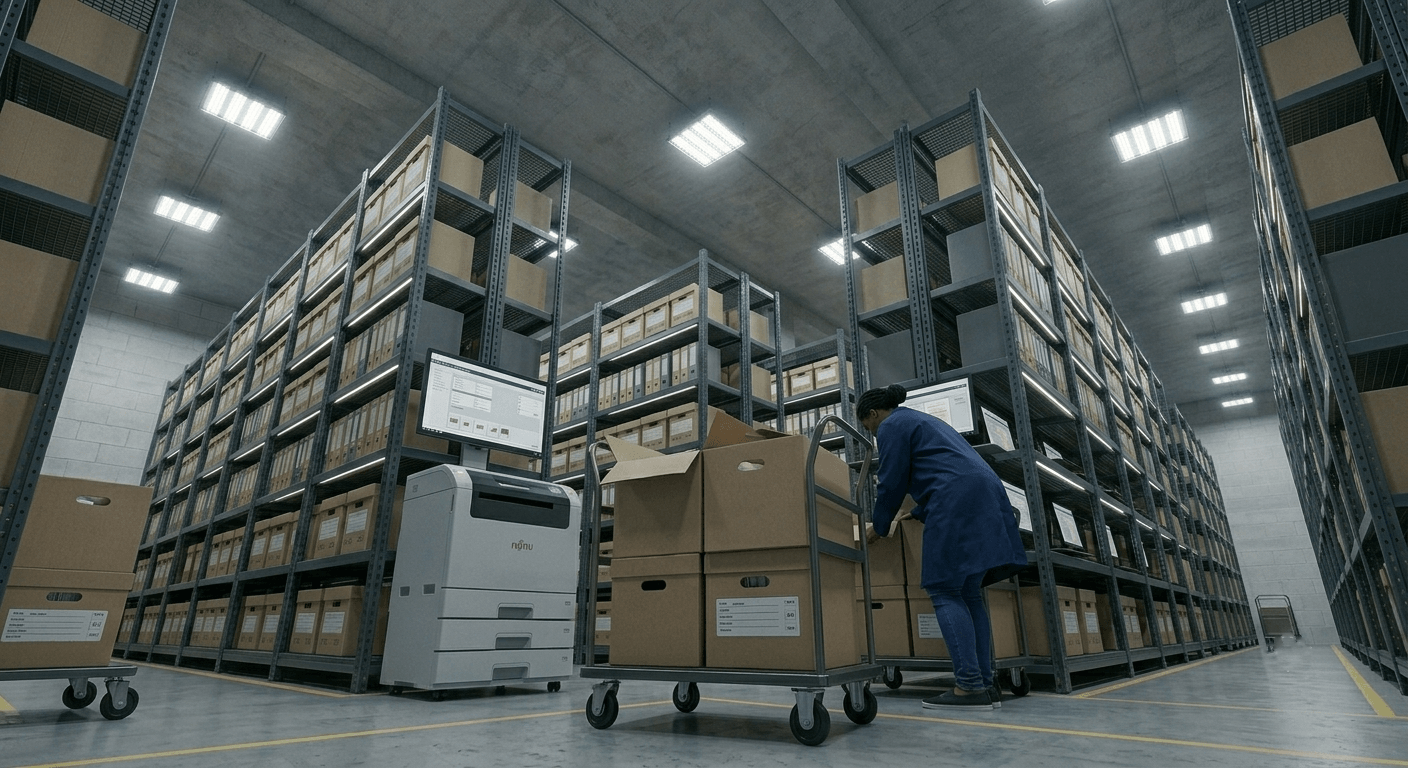
SwiftFiles Solution provides end-to-end document digitization services that convert physical records into searchable, secure digital formats. From document preparation and high-resolution scanning through OCR, metadata tagging, and integration with your existing systems, we handle every step of the digitization lifecycle. Whether you need to digitize a single filing cabinet or an entire warehouse of records, our scalable processes deliver consistent, high-quality results.
Paper-based record keeping carries hidden costs that many organizations underestimate. A single filing cabinet can hold roughly 10,000 documents, yet the labour required to maintain, retrieve, and refile those documents can consume hundreds of staff hours annually. By contrast, a properly digitized document can be retrieved in under five seconds from any authorised workstation. Physical storage also imposes a real estate burden — office space in major metropolitan areas commands premium rates, and archive rooms filled with filing cabinets represent underutilised square footage.
Security and compliance present an even greater concern. Paper documents can be removed from premises without a digital trace, misfiled beyond easy recovery, or destroyed in a fire, flood, or theft. Regulatory frameworks such as GDPR, HIPAA, and ISO 27001 increasingly demand demonstrable control over records throughout their lifecycle. Digital records with audit trails provide the chain of custody and access logs that paper systems cannot match, making compliance audits significantly less burdensome.
Disaster vulnerability is another critical factor. A single incident — a burst pipe, an electrical fire, or even a spilled drink — can destroy irreplaceable records. Digitisation, combined with off-site backup and cloud replication, ensures that records survive any physical disaster. This resilience is not merely a convenience; it is a cornerstone of business continuity planning.
Our professional digitization service follows a structured workflow designed to maintain document integrity, data accuracy, and consistent quality at every stage. The process begins with thorough planning and document preparation. Incoming records are assessed for condition — staples, paperclips, bindings, and adhesive fasteners are removed to prevent damage to both documents and scanning equipment. Pages are sorted, checked for tears or folds, and arranged in the correct order. Fragile or oversized documents receive special handling, sometimes requiring flatbed scanning rather than automated sheet-feed scanners.
Production-grade scanners capable of handling hundreds of pages per minute capture images at resolutions typically ranging from 200 to 600 DPI, depending on the document type and intended use. Every image is reviewed for legibility, correct orientation, cropping accuracy, and completeness. Pages that fail quality checks are rescanned immediately. With clean images approved, OCR processing converts the visual representation of text into machine-readable character data, achieving accuracy rates exceeding 99% for clean, typed documents.
Metadata tagging and indexing follow the OCR phase. Each document is assigned descriptive fields — document type, date, department, project code, client name — forming the searchable index that enables instant retrieval. Once validated, the digital records are delivered through the method of your choice: network folder, FTP transfer, cloud storage sync, or direct integration with your existing document management system.
Scanning and OCR produce a digital image with searchable text, but without a structured index, finding a specific document among thousands is like searching for a book in a library without a catalogue. Intelligent indexing provides that catalogue — a metadata framework that organises documents by meaningful attributes such as date ranges, document categories, client identifiers, project codes, or any other classification that matches your operational needs.
Our metadata strategy begins with taxonomy design — defining the categories, hierarchies, and naming conventions that will be applied across the document set. A well-designed taxonomy balances granularity with usability. Indexing can be performed through auto-classification, manual tagging, or a hybrid approach that leverages auto-classification as a first pass with manual review applied to documents that fall below a confidence threshold.
The impact of good indexing on searchability cannot be overstated. Metadata-based filtering allows users to narrow results by document type, date range, author, or department before even entering a keyword. Advanced search interfaces combine full-text and metadata queries, enabling searches that return precise results in seconds.
- Rapid Retrieval: Find any document in seconds through full-text search and filtered queries, eliminating hours of manual file-pulling.
- Space Savings: Free up valuable office space by reducing or eliminating physical storage cabinets and archive rooms.
- Disaster Protection: Digital records can be backed up off-site or to the cloud, protecting against fire, flood, or theft.
- Compliance Readiness: Digital records with audit trails make regulatory compliance and audit preparation straightforward.
- Improved Collaboration: Digital documents can be accessed simultaneously by multiple users across different locations.
- Remote Access: A cloud-based digital archive allows authorised personnel to access documents from any device with an internet connection.
- Cost Savings Over Time: While digitization requires an upfront investment, long-term savings typically deliver a positive ROI within twelve to eighteen months.
- Environmental Benefits: Reducing reliance on paper lowers your organisation's environmental footprint.
We serve clients across legal, financial services, healthcare, government, education, and logistics sectors. Each industry presents unique challenges, and our digitization process is flexible enough to handle them all. We also provide ongoing support after digitization, including integration assistance, staff training on your document management system, and advice on digital retention policies.
Ready to Digitize Your Records?
Contact us to discuss your digitization project and get a customized proposal.
Get in TouchRelated Services
Explore our full range of records management solutions.